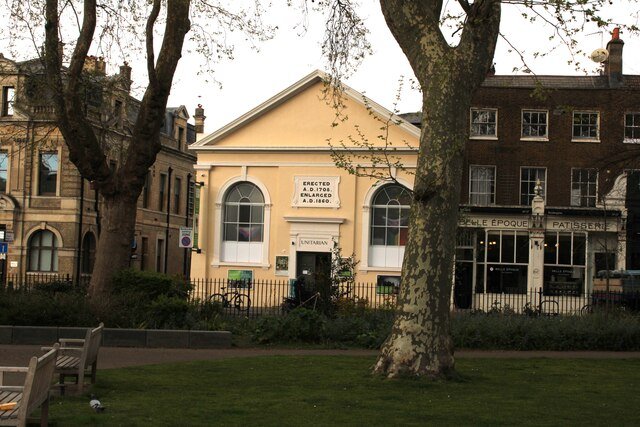
High Anticipation Ahead of Newington Green Meeting House’s Latest Radical Art Event
Arts and culture venue, Newington Green Meeting House, a building renowned for its history of dissenting ideas, is generating excitement ahead of its upcoming event celebrating a radical artist from the local area. This latest event comes after the £1.75 million the meeting house received from the National Lottery Fund in 2020, which saved the building from falling into disrepair.
The renovations, which finished in 2023, created a resurgence of interest in the building with locals flocking to its cultural events. Now, on the 28th October, the meeting house is set to celebrate 100 years since John Berger, a radical writer and artist, was born in Stoke Newington. Known for his Booker Prize winning piece “G.” and 1972 BBC series “Ways of Seeing,” Berger is remembered for his innovative and controversial contributions to literature and art.
Gareth Evans, the series curator of John Berger at 100, spoke of the excitement “here in Hackney” to “bring writers and filmmakers from his [Berger’s] wide landscape of collaborators’ to ‘where he was born in 1926”.
The series includes a screening of Berger’s rare documentaries and an interview with writer Tom Overton on his recent biography “John Berger: From Life.”
The biography is “path-making,” Gareth explained, and illuminates why Berger’s “early life in London [Hackney] was key to his later concerns and themes”.
The meeting house itself provides an apt venue to celebrate the centenary of Berger’s birth because of its history of radical thinking. It was where, in the 1700s, Mary Wollstonecraft met Joseph Johnson, who would publish her pamphlets “Thoughts on the Education of Daughters.” Today the meeting house hails itself as ‘the birthplace of western feminism.’
Reverand Adam Slater, the minister at the meeting house explained how the venue preserves the legacy of Wollstonecraft.
He said: “It is not a museum of ideas but a place to inspire people.”
“I feel an obligation to be aware that the mother of feminism went to church here [and that is reflected] in what we do today [through services and events].”
(Intended for Islington Gazette)